


Olin > Blog > What devices make up an alarm system?
What devices make up an alarm system?
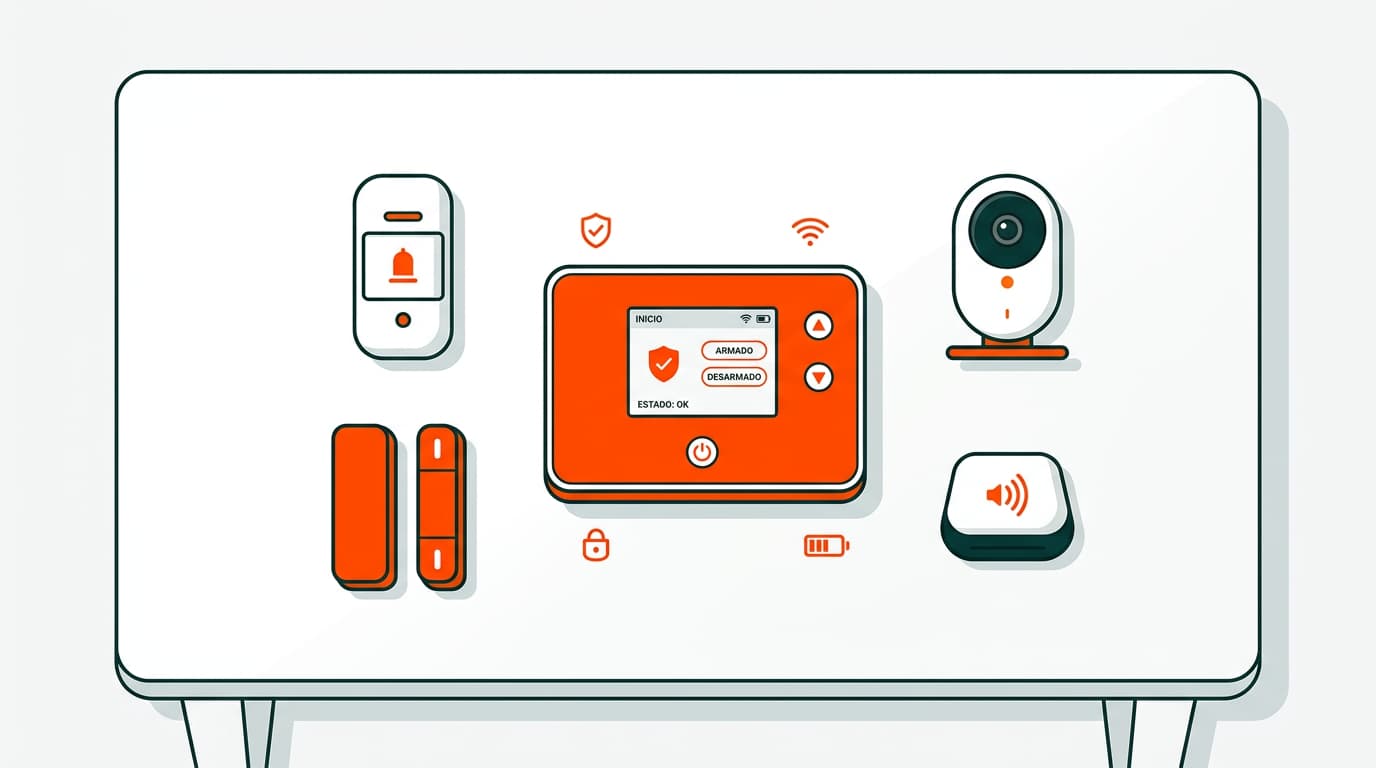
Find out which devices make up an alarm system, how each one works and how to choose the right alarm for your home.
When someone starts looking into a home security system, they usually come across several different parts: sensors, control panels, cameras, sirens and more. Everything sounds important, but it is not always obvious what each element does or how they all work together. Understanding alarm devices helps you choose more confidently, avoid unnecessary costs and identify what might be wrong when something stops working properly.
Elements of alarm systems
A modern alarm system combines electronics, communications and detection. It is not enough to have a siren on its own; what matters is how all the alarm devices connect to each other and how they respond to a real intrusion.
1. The control panel: the brain of the system
The panel is the core of the system. It manages the information sent by the sensors, arms and disarms the alarm, and communicates with the monitoring centre. It works like a small integrated computer, with its own processor, communication modules and memory.
In a typical home, the panel is installed in a discreet place, away from direct access points. If an intruder finds it and strikes it, it should keep working thanks to tamper protection systems and internal backup batteries. The panel constantly monitors the status of each sensor. If it detects that one has stopped sending a signal, it records it as possible tampering.
The most modern panels use dual communication paths. They usually combine Wi-Fi or Ethernet with a dedicated SIM card. If the router loses connection or someone cuts the broadband cable, the system automatically switches to the mobile network. The aim is to make sure it can always send an alert outside the property.
2. Detection and monitoring systems
Esta parte del sistema es la que “ve” lo que ocurre dentro y fuera de la vivienda. Cada sensor tiene un propósito concreto y todos trabajan de forma complementaria. Antes de profundizar, conviene recordar que los sensores detectan cambios físicos medibles: movimiento, temperatura, vibración o apertura de una puerta. No hay magia detrás, solo electrónica diseñada para reducir falsos positivos.
Sensors
Motion sensors work using passive infrared or dual technology (infrared + microwaves). The first type detects sudden temperature changes in a specific area. Dual sensors add a second layer that analyses actual movement, reducing mistakes caused by pets, heat sources or draughts.
In second homes, where dust and humidity levels can vary, dual sensors are usually the better option. They remain stable even when the property has been closed for weeks.
Door and window opening sensors are fitted to entry points. They are made up of two parts: a magnet and a detector. As long as both parts remain together, the system understands that the door or window is closed. If they separate by just a few millimetres, the sensor sends a signal. They are usually used together with motion sensors, because each covers a different type of intrusion.
In garages and storage rooms, vibration or glass-break sensors are often added. These detect impacts on shutters, bars or large windows. They are especially useful in ground-floor areas or places with heavy foot traffic
Do you want to know more?
Security cameras
Cameras are not essential in a basic system, but they do make it possible to verify what is happening. In areas such as the Costa del Sol, where many owners spend long periods away, cameras with night vision and remote access help rule out false alarms.
Video transmission is handled using standard protocols such as RTSP and, when the system is properly configured, the stream is encrypted to prevent external access.
AI-based human motion detection reduces the usual issues caused by shadows, reflections or animals. Even so, a camera does not replace sensors; it simply adds context.
Detectors
Gas, smoke and flood detectors are designed for household risks that are not related to intrusion. They use very different technology from a motion sensor. An optical smoke detector, for example, measures how internal light is scattered when there are particles in the air.
In older homes or poorly ventilated properties, these devices can provide the first warning before a problem turns into a real emergency. They are not usually included in a basic kit, but they are worth considering in second homes where a leak or incident could go unnoticed.
3. Alert elements
When the system detects something, it needs to warn people outside the property and discourage the intruder. This is where the alarm devices responsible for noise, light or communication with the monitoring centre come in.
Deterrent elements
Outdoor sirens play a very clear role: a loud sound and strobe lighting so the intruder knows they have been detected and the neighbours may hear it. Sirens are usually around 110 dB, a level similar to a lorry passing a few metres away. That volume is not chosen for effect; it is used because studies show that immediate attention from the surrounding area rises sharply above 100 dB.
Warning signs also matter. Although they may look like simple notices, they can help make an intruder rule out the property before even attempting anything. In security, deterrence is a key part of protection.
Active protection elements
Indoor sirens serve a different purpose. They are not designed to alert neighbours, but to disrupt the intruder’s perception. In small spaces, a continuous sound can be disorientating. That quick reaction often buys time for the monitoring centre to contact the police if the system is connected.
Some systems also include automatic lighting. Turning on the lights during an intrusion does not just act as a deterrent; it also helps cameras capture the scene more clearly.
4. Power sources
There is little point in having a sophisticated system if it stops working during a power cut. That is why panels and sirens rely on internal backup batteries. These batteries usually last between 12 and 24 hours, depending on the model. That margin covers typical outages or simple sabotage attempts.
Wireless sensors run on long-life batteries. They usually last more than a year and send a warning in advance when they need replacing. In humid or very hot environments, such as some parts of the Costa del Sol, it is a good idea to check the batteries before the hottest months, because temperature affects their internal chemistry.
5. Other additional protection devices
Advanced systems can include extra communication modules, touch keypads, remote controls and even perimeter detectors for gardens or terraces.
Perimeter detectors work with infrared beams or microwaves between two points. If someone crosses the line, the system raises an alert before they even reach the door. In detached or semi-detached homes with large outdoor areas, this type of protection stops the intruder from having time to force access points without anyone knowing.
Keypads let you arm or disarm the system, but they can also display faults and warnings. Some include RFID readers so you do not have to rely on number codes, which is useful if several people use the property and you want to manage access more easily.
How to choose the right alarm system for your home
The right choice depends largely on the type of property and how you use it. On the Costa del Sol, permanent homes and second homes sit side by side, and that difference matters. If the property is left empty for long periods, prioritise cameras with remote access and a panel with dual communication paths. If you work from home and are inside most of the time, you may prefer more opening sensors and fewer cameras.
For a flat in a residential building, motion and opening sensors are usually enough. For a townhouse, it makes sense to add outdoor protection or perimeter sensors. If you have a garage with direct access to the home, include detection in that area too.
Before choosing a specific system, it is also worth checking the quality of the support service and how easy it is to manage the alarm from your phone. A clear app that shows events and system status without complications makes a real difference when you are away.
If you want to see complete options designed for homes on the Costa del Sol and installed professionally, take a look at everything we offer at Olin Protect.

Very Satisfied
The service is excellent, and we always pay the same amount. We’ve been customers for three years. The staff at the store are very professional and serve us in three different languages!