


Olin > Blog > What is asymmetric broadband? Differences vs symmetric broadband
What is asymmetric broadband? Differences vs symmetric broadband
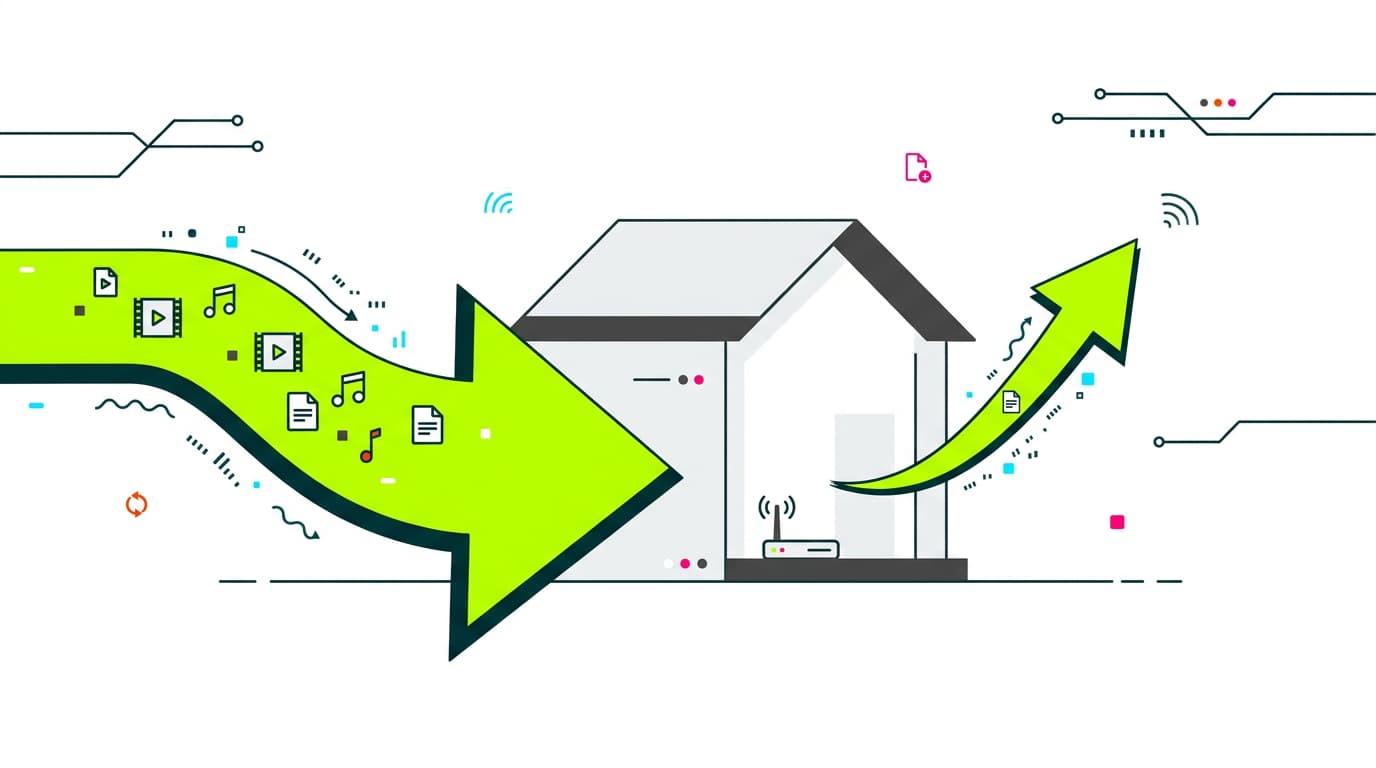
Asymmetric broadband has faster download than upload speeds. Learn how it compares to symmetric broadband and which option suits your needs best.
Asymmetric broadband is a type of internet connection where download speed is much higher than upload speed.
This means you can download files, films or games quickly, but it takes longer to send files or join a video call.
If you’ve never heard of it before, don’t worry. In this guide, we’ll explain what asymmetric broadband is, how it differs from symmetric broadband, and which option is right for you. You’ll also see real-life examples, typical use cases and practical advice. Because yes, the difference between symmetric and asymmetric broadband may seem small… until you actually need it.
What is asymmetric broadband?
Asymmetric broadband is an internet connection where download speed is higher than upload speed. In simple terms, you receive data very quickly, but sending data — such as files, videos or audio — is slower. This type of connection is still common in Spain, especially in entry-level home plans like 300 Mb or 600 Mb. It is typically based on GPON (Gigabit Passive Optical Network), a technology designed to prioritise downloads over uploads.
In other words, it’s built for consuming content rather than creating or sharing it in real time.
What is asymmetric broadband used for?
Asymmetric broadband works well when most of your internet activity involves downloading content. For example:
- Watching videos on YouTube, Netflix or other streaming platforms
- Downloading large files (games, updates, documents)
- Browsing websites and social media
- Using WhatsApp, email or apps with minimal upload needs
- Streaming music without interruptions
For many households, this is more than enough — especially if no one works from home or relies heavily on cloud-based tools. It’s also common in areas where symmetric broadband isn’t widely available or where lower-cost plans are preferred.
Why does this difference matter?
Because many plans advertise speeds like “600 Mb broadband”, but that figure usually refers only to download speed. If your upload speed is limited — for example, 100 Mb — and you need to send large files, upload photos or share your screen during meetings, you’ll notice the difference.
That’s why it’s important to check whether your connection is symmetric or not before signing up. Some providers include it in the product details, but it’s not always clearly highlighted.
Key features of asymmetric broadband
Asymmetric broadband is a solid option for everyday use, especially if your needs are simple. Its main characteristics include:
- High download speed: ideal for streaming, browsing and downloading
- Lower upload speed: fine for messaging and light use, but limited for video calls or large uploads
- More affordable pricing: typically cheaper due to reduced upload capacity
- Good for home use: suitable if you don’t rely on intensive or professional internet usage
Differences between asymmetric and symmetric broadband
Understanding the difference between symmetric and asymmetric broadband helps you choose the right service.
1. Upload speed
- Symmetric broadband: same upload and download speed. Ideal for video calls, file sharing or live streaming
- Asymmetric broadband: much lower upload speed, which can be limiting for remote work or content sharing
2. Download speed
- Symmetric broadband: fast and consistent
- Asymmetric broadband: also fast, though performance can vary under heavy demand
3. Price
- Symmetric broadband: slightly more expensive, but more versatile
- Asymmetric broadband: more affordable and designed for content consumption
4. Usage profile
- If you’re a gamer, streamer, remote worker or regularly upload content, symmetric broadband is the better choice
- If you mainly watch Netflix, browse and download, asymmetric broadband will do the job perfectly
5. Network technology
- Symmetric connections often use XGS-PON, enabling high speeds in both directions
- Asymmetric connections typically rely on GPON, which prioritises downloads
As you can see, the difference between symmetric and asymmetric broadband isn’t just about speed. It also affects stability, performance and how your connection behaves in real-life situations.
If you’re still unsure, keep this in mind: symmetric broadband lets you actively participate online (upload, share, stream), while asymmetric broadband is better suited to passive use (watching, browsing, downloading).
Which type of broadband should you choose?
Choosing the right connection depends not just on what you do, but how your network behaves under different conditions.
Escenarios de uso y rendimiento de red
- Passive use profile (asymmetric is enough): If most of your traffic is download-based, asymmetric broadband works well. This includes everyday browsing, 4K streaming and downloading files. In these cases, upload speed has minimal impact on your experience.
- Active use and professional environments (symmetric is essential): For remote work, upload speed becomes critical. Tools like video calls, VoIP or VPNs rely on stable, two-way data flow. If your upload bandwidth is saturated — for example, uploading files while on a call — you may experience lag, interruptions or dropped connections. The same applies in households with many connected devices. Symmetric broadband helps prevent bottlenecks when several users are online at once.
Market reality: pricing, availability and transparency
Today, symmetric broadband is becoming the standard across most full broadband networks (FTTH) in Spain.
Asymmetric options are usually limited to older technologies or low-cost entry plans.
- Is it really cheaper?: The price difference is often small — typically around 10–15%.
- Is it worth it?: From a technical perspective, not really. The performance limitations on uploads can quickly outweigh the small savings.
- How to check: Providers don’t always make this obvious. Look for details like:
- 600/600 → symmetric
- 600/100 or 600/60 → asymmetric
Do you need to change your router?
In most cases, no. Modern broadband routers are designed to handle both upload and download traffic efficiently.
If you switch from asymmetric to symmetric
- The change is usually done remotely by your provider
- Your existing router will typically support the new speeds
- You may only need to restart the device
What about WiFi performance?
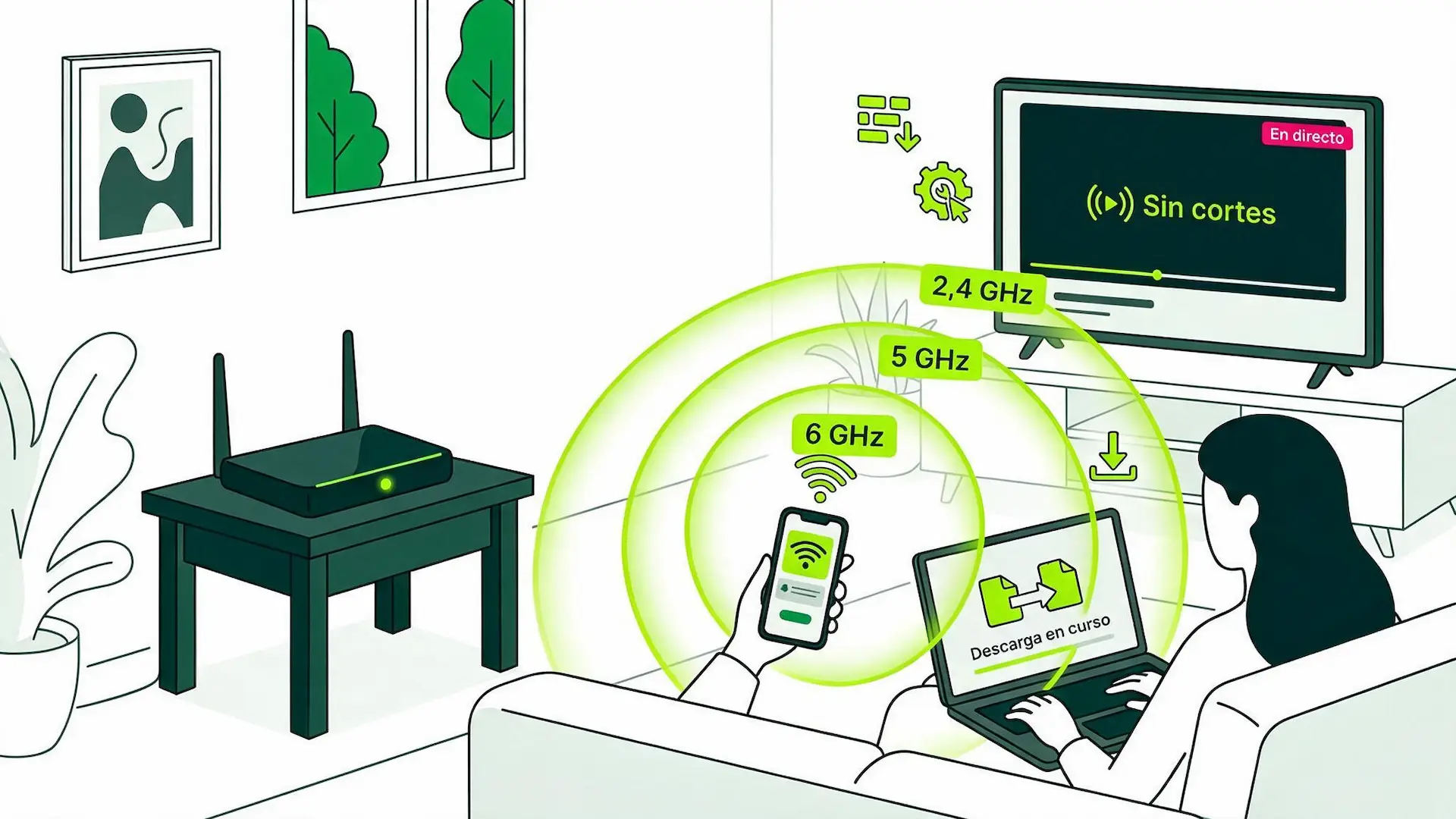
Even if your broadband is fast, WiFi can become the bottleneck. To fully benefit from higher upload speeds, your router should support:
- 5 GHz band
- WiFi 5 or WiFi 6 standards
Older routers using only 2.4 GHz will significantly limit your speed, regardless of your plan.
The choice is simpler than it seems. If your internet use is relaxed — streaming, browsing and little else — asymmetric broadband is more than enough, and it helps keep costs down. But if you work from home, upload content or rely on smooth video calls, limited upload speed will quickly become frustrating. In that case, symmetric broadband isn’t a luxury — it’s essential.
At Olin, the network is ready for both. Take a look at the available plans and choose the one that truly fits your day-to-day life.

Very Satisfied
The service is excellent, and we always pay the same amount. We’ve been customers for three years. The staff at the store are very professional and serve us in three different languages!