


Olin > Blog > Satellite Internet: What Is It and How Does It Work?
Satellite Internet: What Is It and How Does It Work?
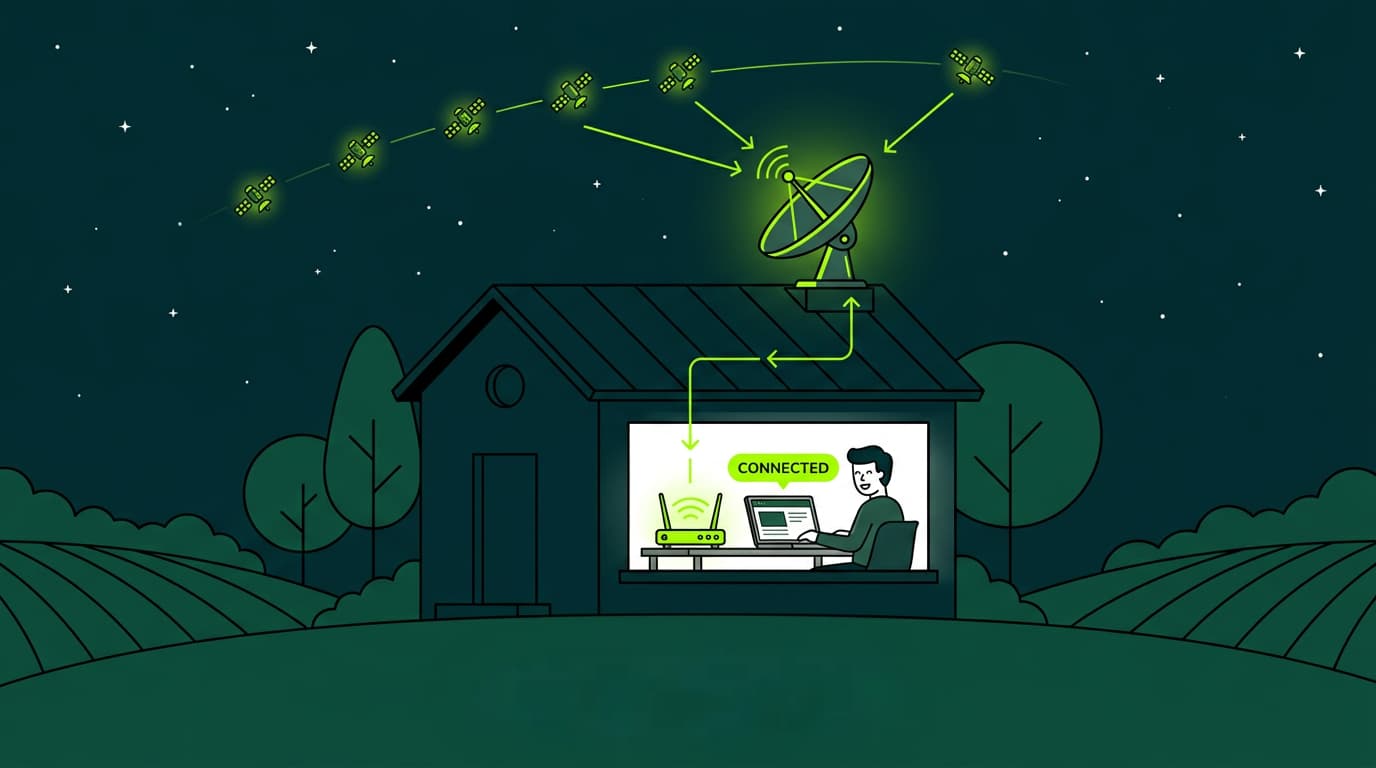
Satellite internet is not the future, it is already here. Discover what satellite internet is, how it works, its price and its advantages
Satellite internet is no longer a technology reserved for scientific expeditions or ships out at sea. Today, it is a real option for homes, businesses and second homes, especially in areas where broadband or ADSL still do not reach. It can make all the difference for people living in rural areas, remote workers on the move, or second homes used only part of the year.
In this guide, we look at what it is, how it works, how much it costs, and its main advantages and challenges, so you can compare it with other technologies such as broadband or ADSL and make an informed decision.
What is satellite internet?
Satellite internet is a type of connection that transmits data through satellites orbiting the Earth, instead of using ground-based infrastructure such as copper wiring or broadband cables. This technology allows a home, business or even a vehicle to access the internet, as long as it has a satellite dish installed and a clear view of the sky.
Today, two main types of satellites are used. Geostationary satellites, located around 36,000 kilometres above the Earth, remain in a fixed position in relation to the planet and cover large areas. Low Earth orbit satellites are much closer, orbiting between 500 and 1,200 kilometres, and offer much shorter response times.
How does satellite internet work?
Although it may look like magic from the outside, satellite internet follows a very clear process. The key is that the signal travels through space instead of moving through kilometres of cable.
The connection process
The journey starts with your router, which sends information to a satellite dish installed at your home. The signal is then transmitted to an orbiting satellite, which acts like a mirror and redirects it to a ground station. That station is connected to the global internet network, allowing the information to reach the server that hosts the website or service you are using. The return journey follows the same route in reverse.
With geostationary satellites, this journey covers around 72,000 kilometres for the round trip, which causes latency that usually sits between 500 and 700 milliseconds. Low Earth orbit satellites are much closer, which greatly reduces that distance and allows latency of 20 to 40 milliseconds, similar to what you can get with broadband.
Advantages of satellite internet
Unlike broadband or ADSL, this technology does not depend on a physical network being available near your location. That gives it a clear advantage in certain situations.
Access in remote and rural areas
The biggest strength of satellite internet is that it can reach areas with no cabling and no planned installation in the near future. You do not need poles, ducts or complex building work. With a properly aligned dish and a clear sky, you can have a connection even on an isolated plot of land, in a country house or in a mountain home. On the Costa del Sol, this means second homes in inland areas of Malaga or Cadiz can enjoy internet access without waiting for broadband to arrive.
Almost global coverage
Another important advantage is that coverage is much wider than with ground-based networks. It is possible to have internet at sea, in desert areas or even in regions affected by natural disasters, as long as the dish and equipment can be powered. This also makes satellite internet a backup option for businesses that cannot afford to lose connection.
Price of satellite internet
The cost of the service depends on the technology used and the provider. In Spain, services based on geostationary satellites usually offer speeds of between 30 and 50 megabits per second, with prices ranging from €30 to €50 per month, normally with data limits. Low Earth orbit satellite services, such as Starlink, offer between 100 and 250 megabits per second with unlimited data, with fees of around €50 to €70 per month. The dish and router kit can cost from €450.
In most cases, installation is quicker than laying broadband cable, although not as immediate as the broadband installation process in areas with existing coverage.
Want to know more?
Why choose satellite internet?
This technology is especially useful if you do not have broadband or ADSL coverage, if you need a connection in remote areas, or if you are looking for a backup system to avoid service interruptions. By the way, here you can check whether you have broadband at home.
For online gamers or people who make high-quality video calls, low Earth orbit satellites are much more suitable than geostationary satellites, as their lower latency allows for a smoother experience.
Challenges and the future of satellite internet
Despite its advantages, satellite internet still faces important challenges:
- Latency, especially with geostationary satellites, remains an obstacle for applications that depend on very fast response times.
- Adverse weather conditions, such as heavy rain or storms, can weaken the signal.
- The initial cost of the equipment is not always affordable, and low Earth orbit constellations require significant energy consumption to remain operational.
The future lies in reducing latency, lowering equipment costs and increasing network capacity. According to the International Telecommunication Union, low Earth orbit satellite constellations will be essential for closing the digital divide, especially in areas where broadband is not viable.
Satellite internet is a solid solution for people who live or work in areas without access to broadband or ADSL. The arrival of low Earth orbit satellites has delivered a major improvement in speed and latency, bringing the experience closer to that of ground-based connections.
On the Costa del Sol, this technology can be key for second homes, remote working from isolated locations, or ensuring connectivity for businesses that cannot afford to lose service.
If broadband coverage is available in your area, it will probably be the best option in terms of stability and cost. You can explore our broadband and broadband + mobile plans to compare your options and make a decision with all the information.

Very Satisfied
The service is excellent, and we always pay the same amount. We’ve been customers for three years. The staff at the store are very professional and serve us in three different languages!