


Olin > Blog > 4G vs 5G: What’s the difference?
4G vs 5G: What’s the difference?
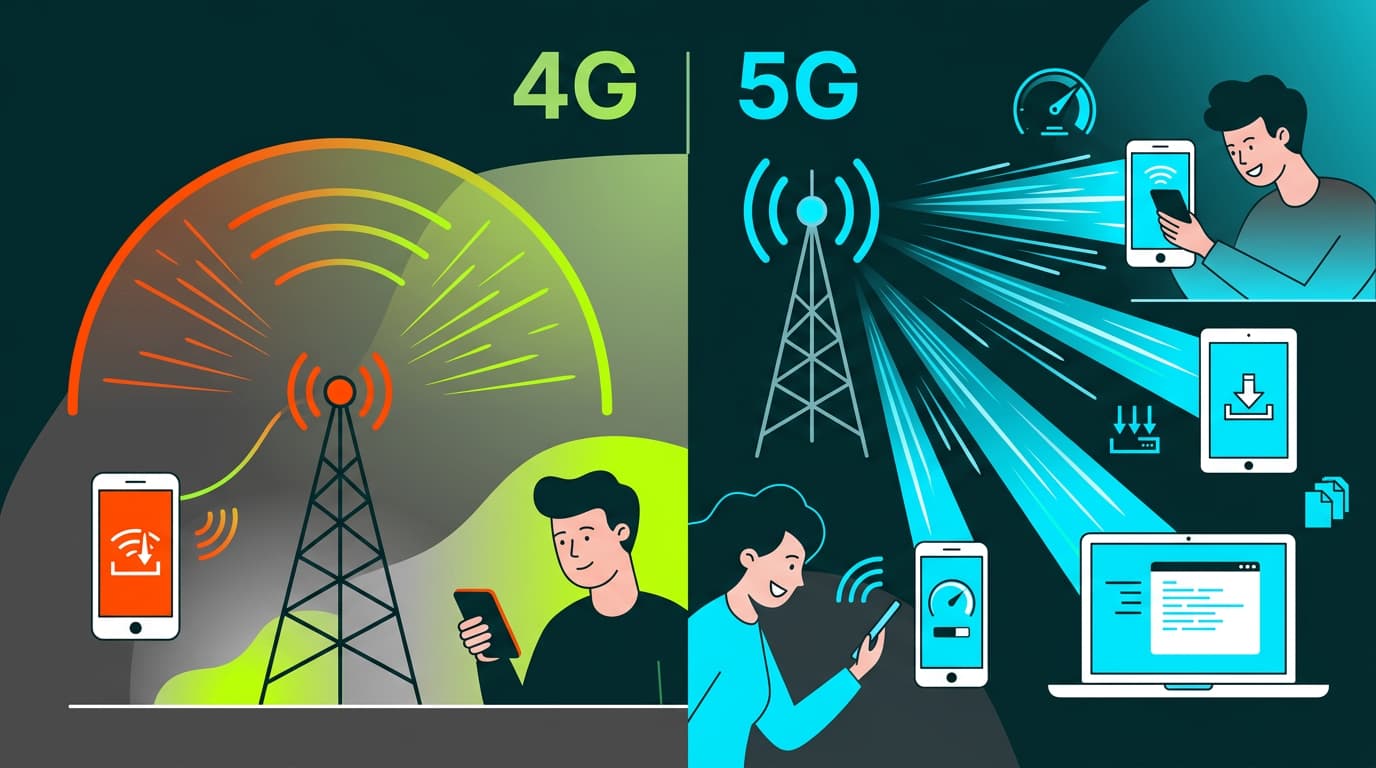
Learn the key differences between 4G and 5G. Compare speed, coverage, latency and real-world performance to see which suits you best.
Today we’re looking at a topic that’s probably caught your attention: the differences between 4G and 5G. You’ve likely heard a lot about both, but what actually sets them apart?
Let’s break it down in a clear and straightforward way.
What are 4G and 5G?
4G and 5G are mobile network technologies that allow data to be transmitted at high speed. 4G, the fourth generation, launched commercially in 2009 and is still the most widely used network today. 5G, the fifth generation, started rolling out in 2019 and is gradually becoming more available.
Both rely on radio waves to transmit data, but they operate differently. 4G works on frequencies below 6 GHz, while 5G can use much higher frequencies, even above 24 GHz. This is what enables much faster performance.
4G vs 5G: key differences
How they work
Both technologies use radio waves, but 5G takes things further. It uses higher frequencies and a system called massive MIMO, which allows multiple antennas to send and receive data at the same time.
This makes 5G more efficient and capable of handling more connections simultaneously.
Coverage
For now, 4G still has the edge in coverage.
Higher-frequency signals used by 5G don’t travel as far and struggle more with obstacles like buildings. This means more base stations are needed to deliver consistent coverage.
4G, with lower frequencies, offers wider reach and better indoor performance.
Speed
This is where 5G clearly stands out.
- 4G has a theoretical maximum speed of around 1 Gbps
- 5G can reach up to 20 Gbps
In real-world use:
- 4G typically delivers between 10 and 50 Mbps
- 5G usually ranges from 100 to 200 Mbps
Latency
Latency is the time it takes for data to travel from one point to another.
- 4G latency: around 50 milliseconds
- 5G latency: as low as 1 millisecond
This near-instant response is essential for real-time applications.
Applications
Thanks to higher speeds and lower latency, 5G supports new types of technology, such as:
- Virtual and augmented reality with minimal delay
- Remote medical procedures
- Autonomous vehicles
4G can handle everyday use perfectly well, but it’s not designed for these more demanding scenarios.
If you’d like to explore this further, take a look at our post on “What is 5G?”, where we go into more detail.
Which is better: 4G or 5G?
It depends on what you need.
- If you want faster speeds and access to the latest technology, 5G is the better option
- If you prioritise stable coverage and availability, 4G remains a reliable choice
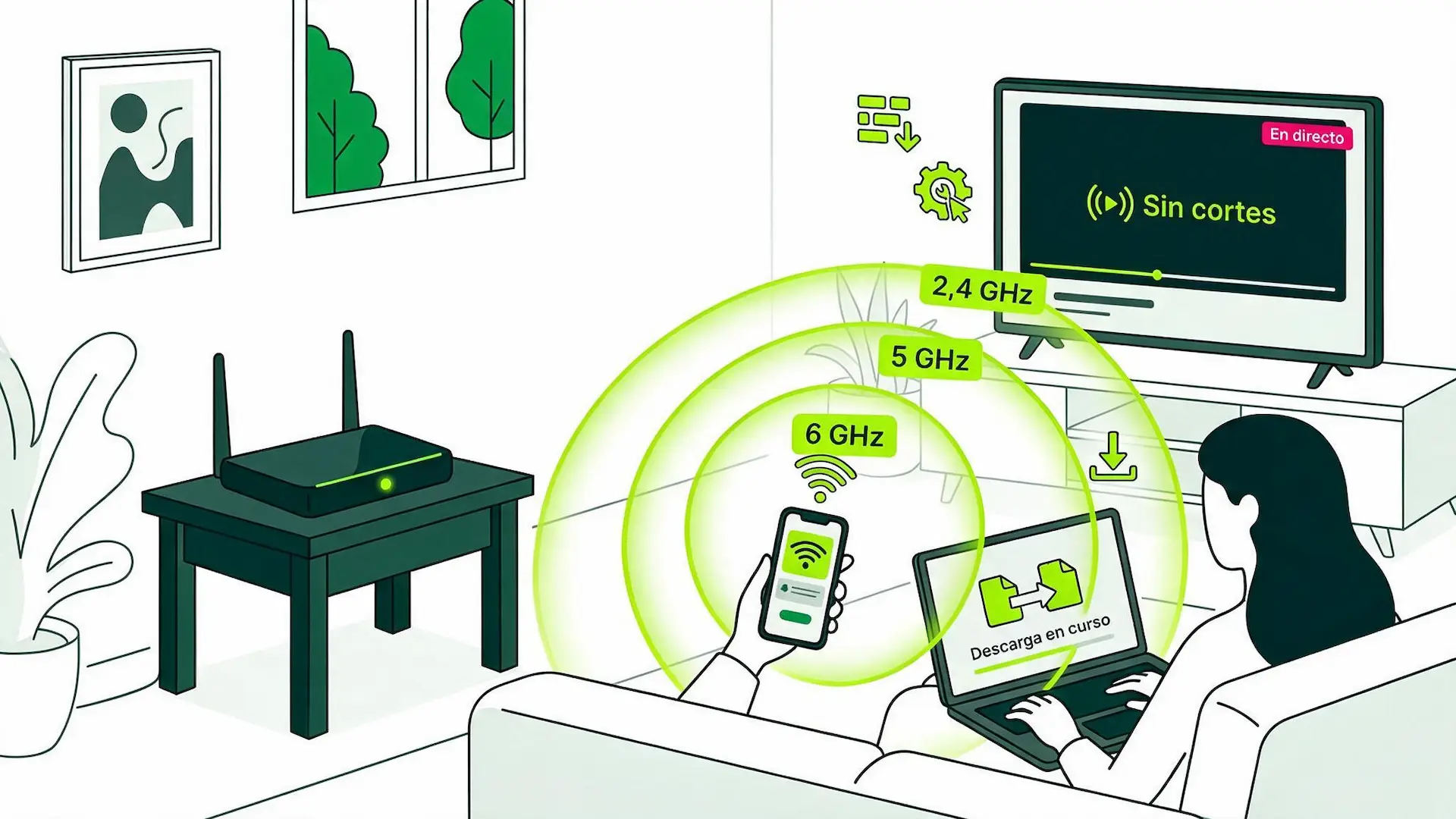
At Olin, we offer both 4G and 5G in our mobile plans, so you can choose what suits you best. And with our broadband services already running on WiFi 6, we’re focused on keeping your connection fast and reliable at home too.
Whether you’re downloading large files, making video calls or simply browsing, the goal is the same: keeping you connected without complications.

Very Satisfied
The service is excellent, and we always pay the same amount. We’ve been customers for three years. The staff at the store are very professional and serve us in three different languages!