


Olin > Blog > Types of Home Alarms
Types of Home Alarms
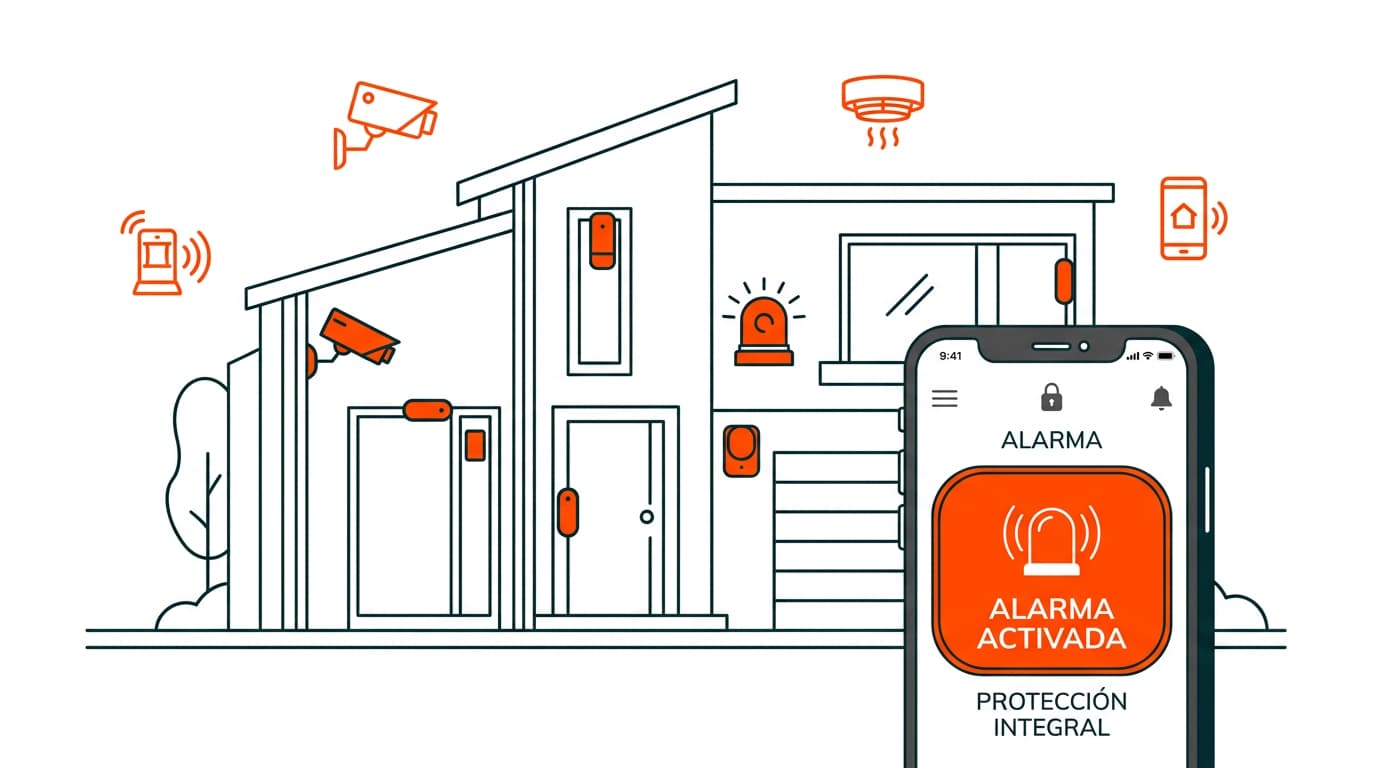
Discover all types of home alarms, their features and benefits, and choose the best one to protect your home
Protecting your home isn’t a luxury—it’s a necessity. We live in a time when security systems have become more accessible and more advanced. Knowing the different types of home alarm systems is key to making the right decision and truly feeling at ease in your day-to-day life. In this article, we explain in detail the main types of home security alarms, their features, and their benefits, so you can choose the one that best suits you.
Types of alarms by connection type
The first way to classify alarm systems is by the type of connection they use. This is an important factor when deciding which security system to install in your home.
Wireless alarms
These systems do not require cables between sensors and the control panel. They use technologies such as WiFi, radio frequency, or Zigbee. They are easy to install, expandable, and very popular in homes and apartments. Many integrate with mobile apps, allowing you to control the alarm from your smartphone. They run on batteries, so it’s important to monitor battery levels to avoid interruptions. While they can be sensitive to electromagnetic interference, modern models include advanced filters that greatly improve reliability.
Wired alarms
These systems work through physical wiring between all devices. They are highly reliable, immune to interference, and require less maintenance than wireless systems. However, installation involves building work, so they are recommended for homes under construction or renovation. Their main advantages are stability and durability, and they are commonly used in villas or businesses where security is a top priority.
Hybrid alarms
Hybrid systems combine wired and wireless devices within the same setup. They offer flexibility, allowing you to take advantage of existing installations while adapting specific areas to the needs of the property. They are especially useful in large homes, multi-story houses, or properties with outdoor areas that require additional coverage without running cables everywhere.
Types of alarms by protection level
Alarm systems can also be classified according to the level of protection they provide.
Grade 1
This level offers basic protection and is designed for very low-risk spaces, such as storage rooms or properties without valuable items. These systems are usually not connected to a monitoring center and rely on local sirens to deter intruders. They are not suitable for continuously occupied homes.
Grade 2
This is the most common level for residential use. It is designed for houses, apartments, and small businesses. It includes reliable sensors, alert systems, powerful sirens, and often the option to connect to a monitoring center. It offers a good balance between cost and effectiveness.
For alarms at this level, it’s important to be aware of installation regulations in residential communities.
Grade 3
Designed for high-risk environments such as jewelry stores, tobacco shops, or pharmacies. These systems are legally required in many businesses and include more advanced devices: dual communication paths, perimeter protection, cameras, and higher resistance to tampering.
Grade 4
The highest protection level, reserved for critical infrastructure, military facilities, or government buildings. It requires full redundancy, multiple verification systems, and constant surveillance.
Types of alarms by function
Another way to classify alarms is by their function—that is, their specific purpose.
Intrusion and anti-occupation alarms
These alarms are designed to detect unauthorized access. They use motion sensors (such as PIR), magnetic contacts on doors and windows, or even cameras with image analysis. When an intrusion occurs, a siren is triggered and a notification is sent to the owner or to a monitoring center. This is the most common type and the foundation of any home security system.
Technical alarms
These alarms detect hazardous situations such as smoke, carbon monoxide, gas leaks, water leaks, or power outages. Their purpose is to provide immediate alerts and minimize damage, especially when the property is unoccupied. They are an ideal complement to intrusion alarms, offering more comprehensive and intelligent protection.
Personal alarms
These are designed to protect elderly people, dependents, or individuals with limited mobility. They usually consist of an emergency button integrated into a pendant, bracelet, or fixed device in the home. Pressing the button sends an immediate alert to family members or medical services. Some models include GPS tracking and fall detection sensors.
Want to know more?
Features to consider when choosing an alarm
Before deciding on an alarm system, think about which features you really need. Some systems integrate with home automation, allowing you to automate actions such as turning on lights or opening doors from your phone. It’s also recommended to choose a system with a simple mobile app so you can check your alarm status from anywhere. If you’re interested in a more connected approach, we recommend learning what a smart home is and how it can improve home security.
A backup battery is essential, especially in areas with frequent power outages. Make sure the sensor coverage matches the size of your home and that the system can notify you in real time if something happens.
Not all home alarm systems are the same. Choosing the right one depends on the type of property, the value of what you want to protect, your lifestyle, and the level of peace of mind you want. A good security system doesn’t just deter intruders—it gives you the confidence of knowing your home is protected, wherever you are.
At Olin Protect, we can help you choose the type of alarm that best fits the property you want to protect. Shall we talk?


Very Satisfied
The service is excellent, and we always pay the same amount. We’ve been customers for three years. The staff at the store are very professional and serve us in three different languages!